Your Nonprofit Has Grown. Your CRM Has Not.

Kris Van Kerkhoven • 22 May 2026

Share this article

The hidden cost of a CRM that can't keep up

There is a moment almost every fundraiser recognises.


It is Monday morning. You have three Excel files open, an export from your old database, and a message from a colleague asking whether "the list for the year-end campaign is ready yet." You know the data is somewhere. You are just not sure which version is the right one.


Meanwhile, your donor database keeps growing. More campaigns, more contacts, more revenue. Good news, you would think. But the system that once handled 2,000 donors is struggling under the weight of 8,000.


This is not an exceptional situation. It is a pattern I have seen at dozens of organisations.


How it starts


Most small nonprofits begin with what is available: a spreadsheet, a basic database, sometimes CiviCRM because it is free and someone set it up years ago. That works. For a while.


Then the organisation grows. New staff join. A second campaign channel is added. SEPA direct debits come into the picture. Tax certificates need to go out. Suddenly three people are updating the same database without knowing what the others have changed.


Duplicate records appear. Addresses are no longer current. Certificates go to the wrong person. A donor who has given faithfully for five years receives a "welcome, new donor" email.


The system still runs. It just does not run well anymore.


When does the system start holding you back?


Not when something spectacularly goes wrong. That gets noticed. The slow deterioration is the real problem.


Does any of this sound familiar?


Your team spends more time maintaining data than contacting donors. Producing a report is a project in itself, not a routine task. Every campaign requires a manual data export and cleanup. New staff get frustrated because they cannot make sense of the data. You do not know which donors are on the verge of lapsing.


If three of these five points ring true, your nonprofit has been growing for a while without your system keeping up.


The migration myth


"Switching to a better system will cost us months."


That is true for custom-built implementations. Organisations that bring in a Salesforce consultant for a bespoke project sometimes spend six to twelve months before they go live.

But that is not the only way.


Fundflow works as a product layer on top of Salesforce. The modules for donation processing, SEPA direct debit, automated tax certificates, and Belgian bank file integration (CAMT/CODA) are already built. You configure them for your organisation, but you are not building from scratch.


That difference in approach means a migration from spreadsheets or CiviCRM to Salesforce with Fundflow can realistically be planned in weeks, not months. Without a technical team on the nonprofit's side. Without lengthy specification documents.


What you gain


A fundraiser who spends less time on data maintenance has more time for donors. That sounds simple because it is.


With a system that keeps pace with your growth, you know which donors are at risk of lapsing. Tax certificates go out automatically at the right moment. You see at a glance which campaign is performing. New staff get a working system instead of a tangle of workarounds they have to learn to live with.


Organisations that make this move almost always say the same thing afterwards: we should have done this sooner.


Who is this relevant for?


For nonprofits that are growing and starting to feel the friction. For fundraisers who know data is slipping through the cracks but cannot pinpoint where. For directors who do not want to base the next campaign on a spreadsheet anymore.


And for organisations that have been thinking about Salesforce but are put off by implementation costs and timelines.


Fundflow is a product of Impactella, built by people who have worked in the nonprofit sector. The Belgian market, Belgian banking infrastructure, Belgian tax regulations: we know them from the inside. And for nonprofits in the Netherlands, France, and Germany, the same principles apply.
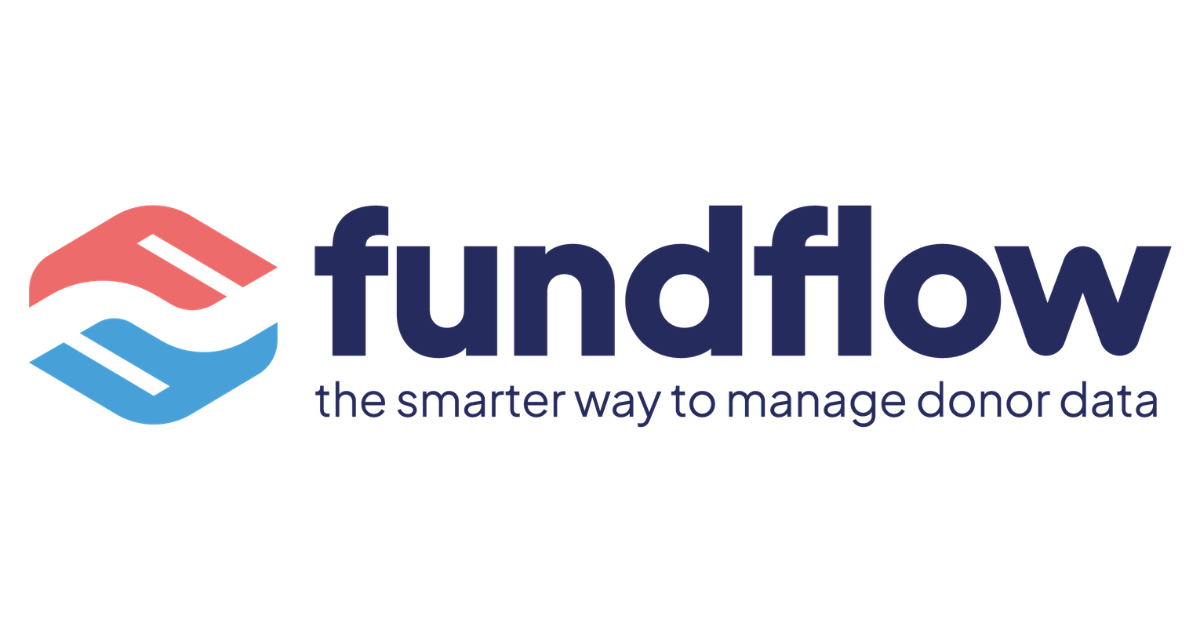
Person working at a desk with three monitors in a cluttered office, focused on data on the screens

Recent Posts

Person working at a desk with multiple monitors in a cluttered office, focused on data on the screens
by Kris Van Kerkhoven 12 June 2026
Streamline your fundraising with Fundflow's Salesforce integration. Automate gift processing & focus on your mission today!
Scrabble tiles spelling “DATA” on a wooden tabletop, with scattered letter tiles around them
by Kris Van Kerkhoven 12 June 2026
Learn how data quality is vital for AI in nonprofit fundraising. Ensure accurate records ¢tralize systems for better results.
Woman working at a desk with a desktop computer in a bright office, typing and smiling.
by Kris Van Kerkhoven 12 June 2026
Fundflow simplifies Salesforce for Belgian nonprofits, automating gift processing & reducing admin tasks. Streamline your fundraising today!
Fundflow vs Odoo comparison banner with logos and dashboard graphics
by Kris Van Kerkhoven 12 June 2026
Comparez Fundflow & Odoo pour votre collecte de fonds. Découvrez les fonctionnalités, les prix et le meilleur choix pour votre nonprofit belge !
Fundflow and Odoo logos on a blue and beige split background with small line icons
by Kris Van Kerkhoven 12 June 2026
Compare Fundflow & Odoo for nonprofit fundraising. Find the best fit for donor management & compliance. Contact us for details!
Fundflow vs Odoo comparison banner with logos and dashboard graphics
by Kris Van Kerkhoven 12 June 2026
Vergelijk Fundflow & Odoo voor jouw nonprofit. Ontdek welk platform het best past bij jouw fondsenwervingsnoden. Vraag advies aan Fundflow!
Woman working at a desk with a desktop computer in a bright office, typing and smiling.
by Kris Van Kerkhoven 12 June 2026
Streamline your nonprofit operations with Fundflow's user-friendly Salesforce solution. Save time & focus on your mission today!
Scrabble tiles spelling “DATA” on a wooden surface, with scattered letter tiles around them
by Kris Van Kerkhoven 12 June 2026
Learn how data quality impacts AI in fundraising. Ensure your data is clean to maximize AI benefits. Contact us for more info!
Person working at a desk with multiple monitors in a cluttered office, focused on data on the screens
by Kris Van Kerkhoven 12 June 2026
Streamline your nonprofit's operations with Fundflow's Salesforce integration. Focus on donor relationships, not data management.
Wooden letter tiles spelling “DATA” on a light wood surface with scattered tiles around them
by Kris Van Kerkhoven 20 May 2026
Over the past few months, there has not been a single sector newsletter without a piece on AI in fundraising. Predictive analytics. Personalised donor communication. Automated segmentation. The promises are big, the tools are available, and the enthusiasm is understandable. But there is a conversation that is missing. And it is not about AI.  It is about your data. What AI actually does An AI tool for fundraising does, in simple terms, one thing: it analyses patterns in your historical data and uses those patterns to make predictions. Who is likely to give again? Who is ready for a larger gift? Who is at risk of lapsing? That sounds powerful. And it is, when the data those predictions are based on is reliable. But if your database is full of duplicate records, outdated addresses, gifts not linked to the right campaign, or donors with no communication history, the tool does not give you insights. It gives you errors, at scale, generated automatically. Garbage in, garbage out. That principle is as old as computers themselves. It applies to Excel. It applies to the most sophisticated AI tool on the market. The reality at many nonprofits This is not a theoretical problem. At many nonprofits, including organisations that have been running professional fundraising operations for years, the data often looks like this: The same donor appears three times in the system, under slightly different names or addresses. Gifts are recorded, but without a link to the campaign they came from. SEPA mandates live in a separate spreadsheet, not in the CRM. Communication history is scattered across multiple tools that never spoke to each other. That is not the result of negligence. It is the result of years of getting by with too little time, too few people, and systems that were never built for what you eventually needed them to do. The honest sequence Before a nonprofit invests in AI tools, there is work to be done. Not glamorous work. But the work that determines whether that investment pays off later. In practice, that means three things. Get your basic registration right. Every gift correctly linked. Every donor appearing once in the system. Communication preferences recorded. That is not a nice-to-have. It is the foundation. Centralise your data. Your fundraising, your direct debit mandates, your communication history: these belong in one system, not spread across a CRM, a spreadsheet, and three Mailchimp exports. As long as data lives in silos, no analytical tool can do anything useful with it. Ask the right questions of your data first. Who has not heard from you in the past 12 months? Who has given for five consecutive years but never had a personal touchpoint? These are questions your CRM should be able to answer today, without AI. If it cannot, AI is not yet on the agenda. Then, and only then: AI Once that foundation is in place, AI tools for fundraising genuinely add value. Predictive models that estimate who is ready for a major gift. Smart segmentation that adjusts automatically based on donor behaviour. Personalised communication that scales without losing relevance. But the tool is the last step, not the first. The nonprofits that will get the most out of AI in the coming years are not the ones that bought a tool earliest. They are the ones that got their data in order first. That is the honest message. Less glamorous than the AI stories in your newsletter. But the right one.
Show More